Practical guideKarditsa
Lake Plastiras, Greece: what to do, where to stay, when to go
The man-made lake at 792 metres below the Agrafa mountains: the villages around it, what to do, the Tavropos dam, and why it is worth a visit in winter too.
At a glance
- Elevation
- 792 m
- Area
- About 24 square kilometres
- Dam
- Tavropos (Megdovas), in operation since 1960
- From Karditsa
- About 16 km in a straight line
- Villages around the lake
- Neochori, Morfovouni, Pezoula, Kalyvia Pezoulas, Kryoneri, Lampero
At 792 metres, on the edge of the Agrafa mountains, Lake Plastiras is one of the best-loved destinations in inland Greece. It is man-made: it formed when the Tavropos dam closed the Tavropos, or Megdovas, river, and it has been in operation since 1960. It takes its name from Nikolaos Plastiras, the general from Karditsa who imagined the project as early as 1925.
Around the lake
The road that circles the lake is the backbone of any visit. It passes through Neochori (950 m), Morfovouni (800 m), Pezoula, Kalyvia Pezoulas and Kryoneri, and over the dam itself, with the water far below. By car it takes an afternoon; by bicycle, a day.
What to do
- Hiking on the paths between the villages and through the fir forests around the lake.
- Canoeing, kayaking and horse riding, with local activity companies.
- The Smokovo baths, thermal springs a little further south.
- The Agrafa mountains, for anyone who wants to go on into some of the most remote mountains in Greece.
The lake also has two popular annual events: a summer festival and a mountain running race around the lake. Dates change every year; check the announcements of the Municipality of Lake Plastiras.
When to go
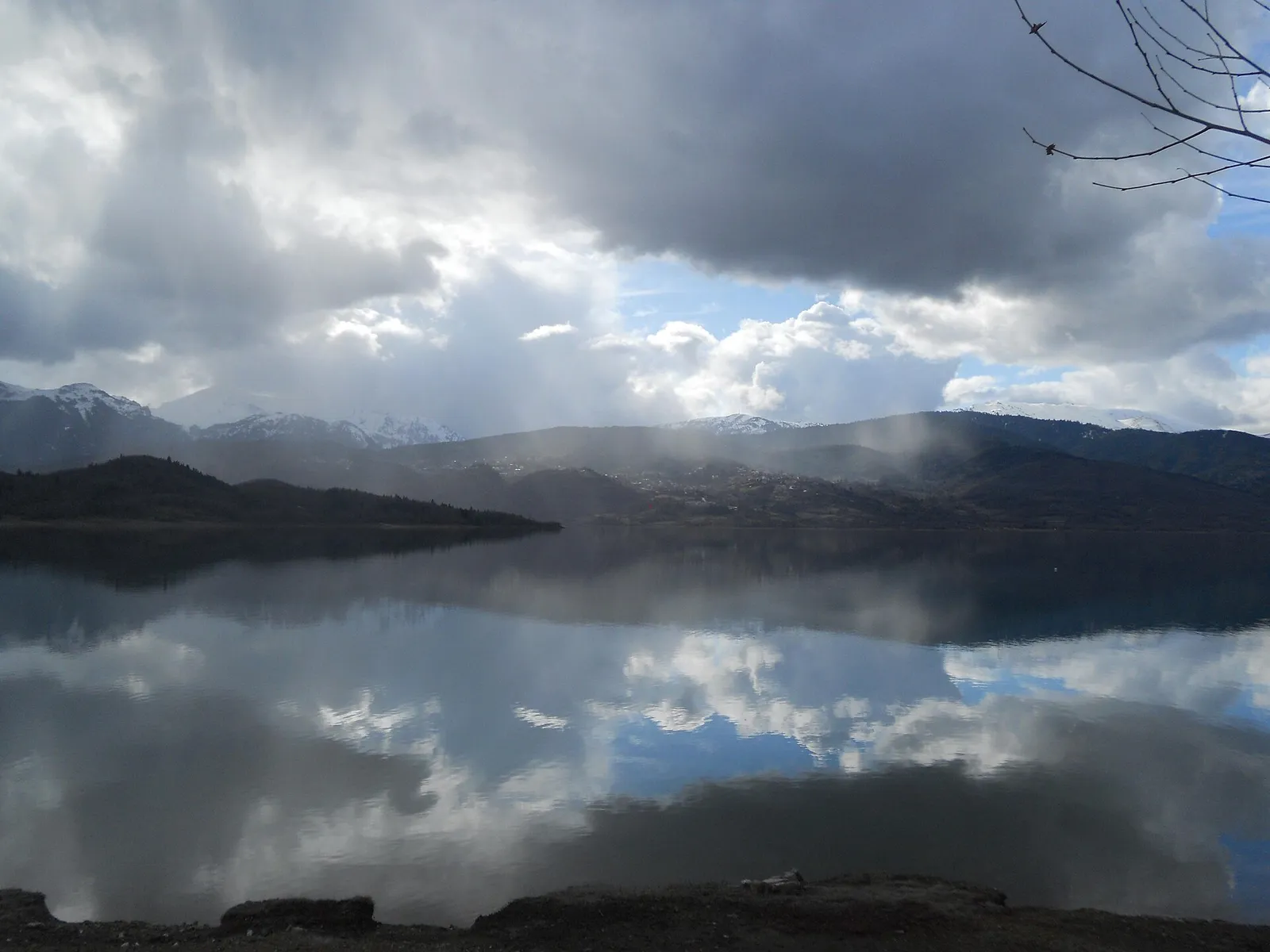
Unlike most Greek destinations, the lake is alive all year round. Autumn and winter, with mist over the water and fireplaces in the guesthouses, are the most popular season. Spring and summer belong to outdoor activities and walking.
For the story of the place, read the magazine's feature on Lake Plastiras.
Frequently asked questions
Why is it called Lake Plastiras?
It is named after Nikolaos Plastiras, the general and politician from Karditsa who first imagined a dam on the Tavropos river as early as 1925. The dam was completed in 1960.
Is Lake Plastiras a natural lake?
No, it is man-made. It formed when the Tavropos dam closed the Tavropos (Megdovas) river in the early 1960s.
What is there to do at Lake Plastiras?
Drive or cycle around the lake, walk the paths between the villages, see the dam, go canoeing or horse riding, and continue to the Smokovo thermal baths and the Agrafa mountains.
When is the best time to visit Lake Plastiras?
Every season has something. Autumn and winter are the most popular, with fireplaces and mist over the water; spring and summer are for hiking and activities on the lake.
How far is Lake Plastiras from Athens?
It is in the Karditsa regional unit of central Greece, roughly four hours' drive from Athens, via Lamia and Karditsa.