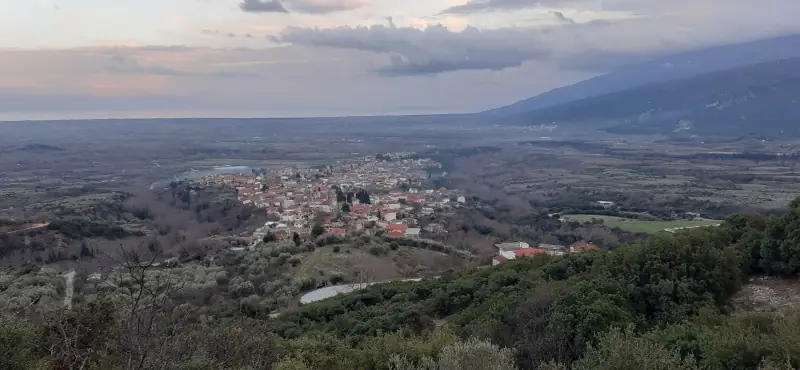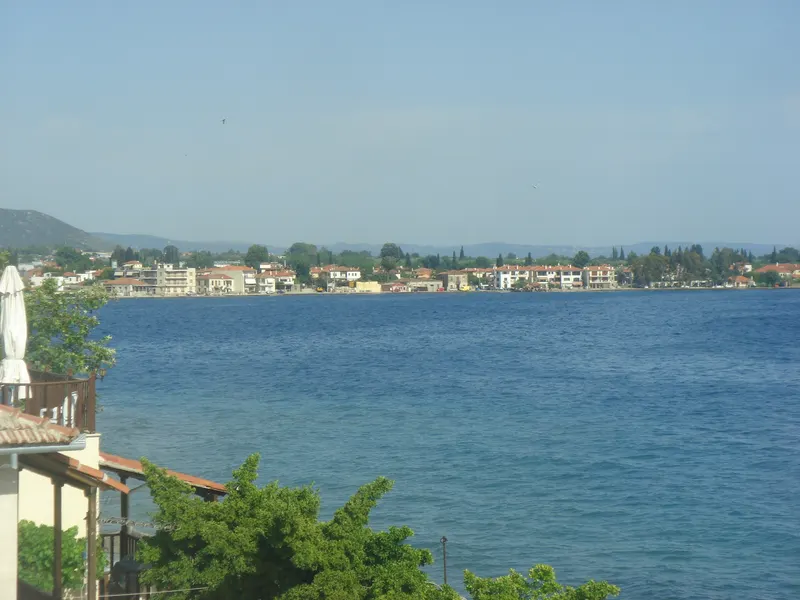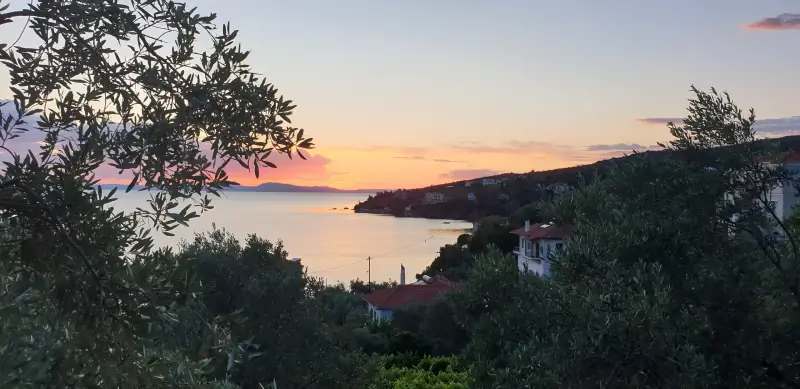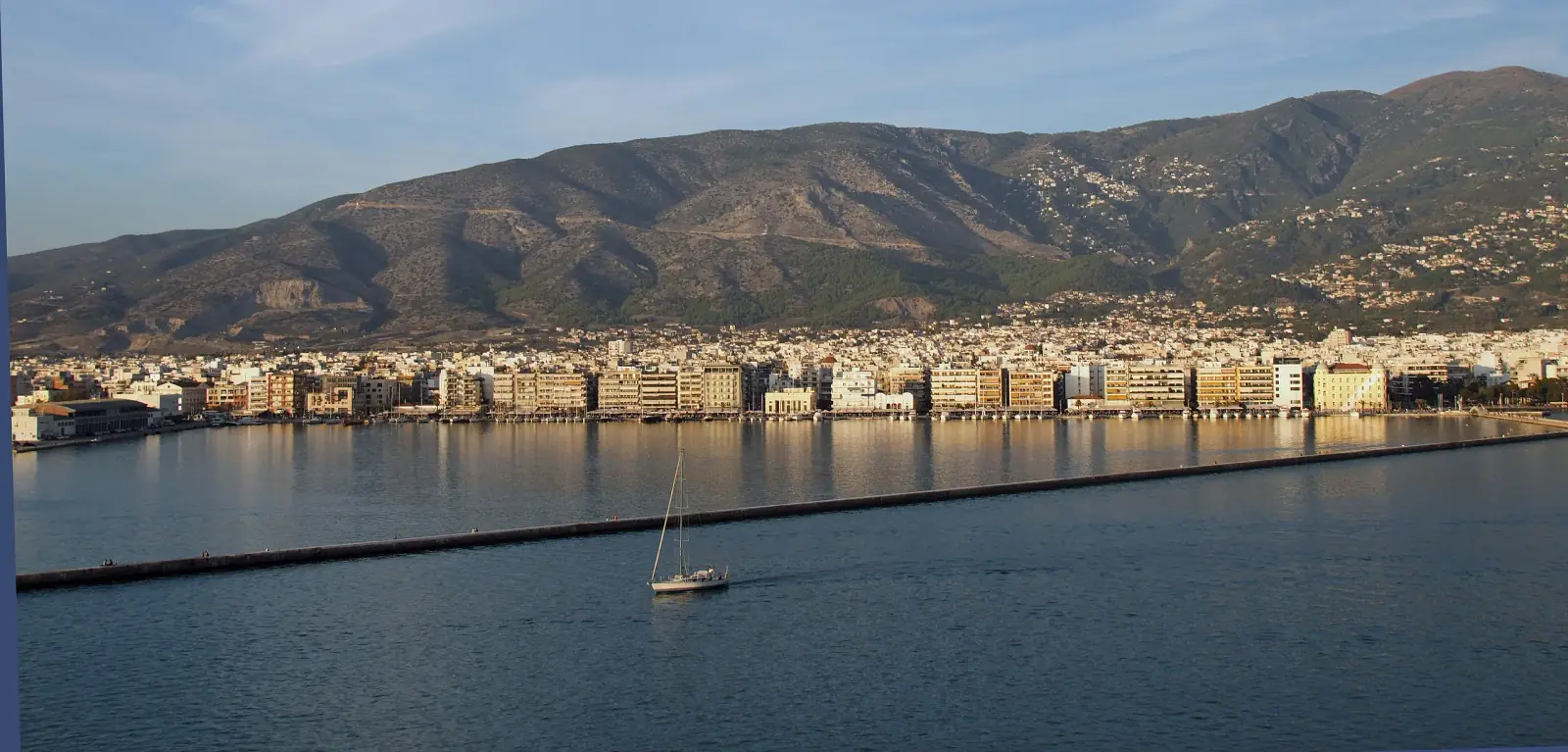
Volos is one of the few Greek cities where you can swim in the morning and be in a village of chestnut trees by lunchtime. On one side lies the Pagasetic Gulf, an enclosed bay of calm water. On the other rises Pelion, climbing steeply behind the last houses. In between is a city with three thousand years of history and a reputation for knowing how to live.
Iolcos, Pagasae, Demetrias
On the site of Volos, or a few kilometres around it, stood three ancient cities. Mythical Iolcos, from where the Argo set sail with Jason. Pagasae, the port that gave its name to the gulf. And Demetrias, founded by Demetrius Poliorcetes around 294 BC, which became one of the great cities of the Hellenistic world.
Older still, a few kilometres outside the city, Sesklo and Dimini are among the oldest Neolithic settlements in Europe. Their finds are displayed in the Athanasakeio Archaeological Museum.
The port of the plain
Modern Volos grew up around its harbour in the 19th century. After 1881, when Thessaly joined Greece, it became the plain's gateway to the sea. In 1884 the railway linked it to Larissa and later to Kalambaka. Factories followed, such as the Tsalapatas tile works, along with tobacco factories and trading houses.
The painter Giorgio de Chirico was born in Volos in 1888, son of the engineer who built the Thessaly Railways. In Pelion and in Volos the painter Theophilos left his murals.
In 1955 strong earthquakes destroyed much of the city. That is why today's Volos has fewer old buildings than you might expect, and many apartment blocks built in the decades that followed.
The city today
Volos is a university city, home to the University of Thessaly, and you can feel it in the streets. The waterfront is its heart: a walk from Agios Konstantinos to the port, bicycles, benches looking across to Pelion. And of course the tsipouro bars, where every small carafe arrives with a meze.
How to get to know it
Give Volos at least two days. One for the city: waterfront, museums, a tsipouro bar. The other for Pelion above it: Portaria, Makrinitsa, Hania. In the evening, from Makrinitsa, Volos looks like a lit crescent around the gulf.