You drive from Volos towards Almyros and, somewhere between the houses and the orchards, fenced-off ruins appear beside the road. This is not one monument. These are pieces of a whole city that was once one of the most important Christian centres in Greece. Nea Anchialos was built on top of it.
Two cities before the town
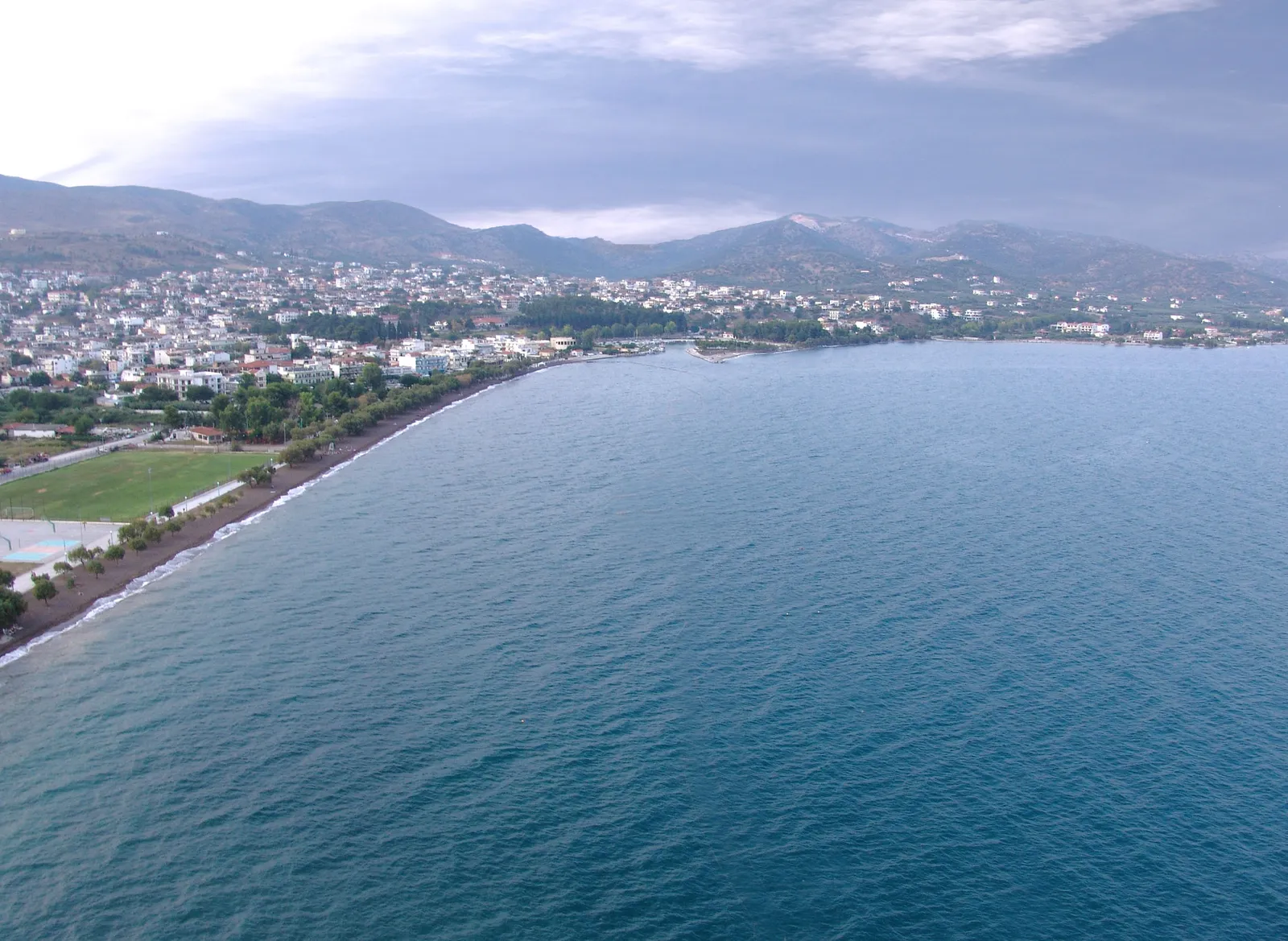
Here, at the north-western end of the Pagasetic Gulf, there was first Pyrasos, which the geographer Strabo called "well-harboured". It was the port of Phthiotic Thebes, a city a little further inland. In 217 BC Philip V of Macedon destroyed both.
A new city soon grew where Pyrasos had been, and it kept the name Phthiotic Thebes. In Christian times, to tell it apart from Thebes in Boeotia, people called it Thessalian or Christian Thebes. It was large: its wall ran for about two kilometres and enclosed some 25 hectares. It was burned and abandoned in the middle of the 7th century.
The basilicas and the mosaics
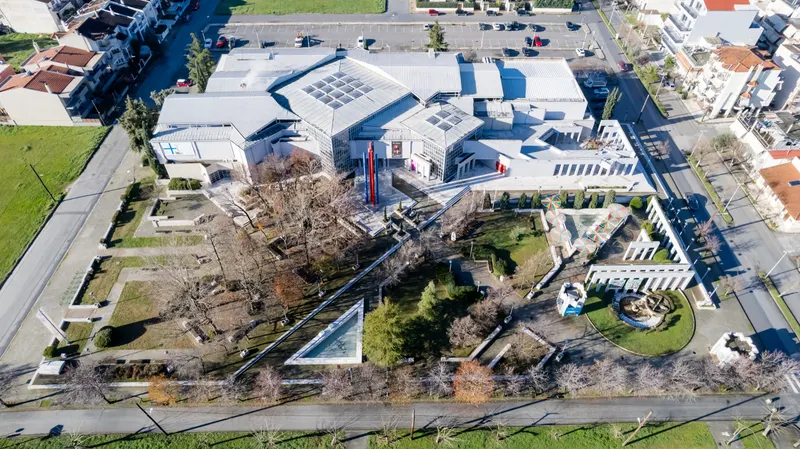
What makes Anchialos special today are the basilicas of the 5th and 6th centuries. Excavations have uncovered the Basilica of Elpidios, the Basilica of Agios Dimitrios, the Basilica of Archbishop Peter, the bishop's palace, baths, a gymnasium and a paved avenue lined with shops. Outside the walls there are also a cemetery basilica, a seaside villa of the 3rd–4th century and tombs cut into the hillside.
The highlight is the mosaic floors. There are so many, and in so many styles, that the site is a reference point for anyone studying this art: geometric patterns, interlaced bands and plant motifs, laid across floors once walked by worshippers, merchants and bishops.
The refugees' town
Modern Nea Anchialos has its own story of uprooting. It was founded in 1907 by Greeks from Anchialos on the Black Sea, today's Pomorie in Bulgaria. On 30 July 1906 their town was burned and its people fled to Greece. They chose to stay together in one settlement named after their homeland, so that the name would not disappear. With government help they bought an estate by the sea, like their old town, and paid it off over the following years.
So the refugees of the 20th century built their houses on the ruins of a 6th-century city. Two stories of exile, one on top of the other.
Practical information
Nea Anchialos is just outside Volos, on the road to Almyros. The ruins are spread across the town: along the main road towards Volos, behind the market and at the western edge. Combine the visit with a swim and an evening in Volos. Nearby, the Neolithic settlements of Sesklo and Dimini take the story of this coast back several thousand years more.