At the end of the 18th century, a mountain village above Tempi had customers in Vienna, Leipzig and Hungary. It did not sell wine or cheese. It sold colour. Ampelakia dyed cotton yarn a red so fast and bright that merchants in Central Europe asked for it by the village's name.
The Common Company
The secret was not only the dye. It was the way the people organised themselves. Around 1780, the village's producers, dyers and merchants joined in a common enterprise, the Common Company of Ampelakia. Many describe it as one of the first cooperatives in Europe. Profits were shared, decisions were taken together, and the village had its own schools and offices abroad.
The boom did not last long. In the early 19th century, wars in Europe, industrial dyeing and internal disputes brought the end. Ampelakia went back to being a quiet mountain village.
The Schwartz mansion
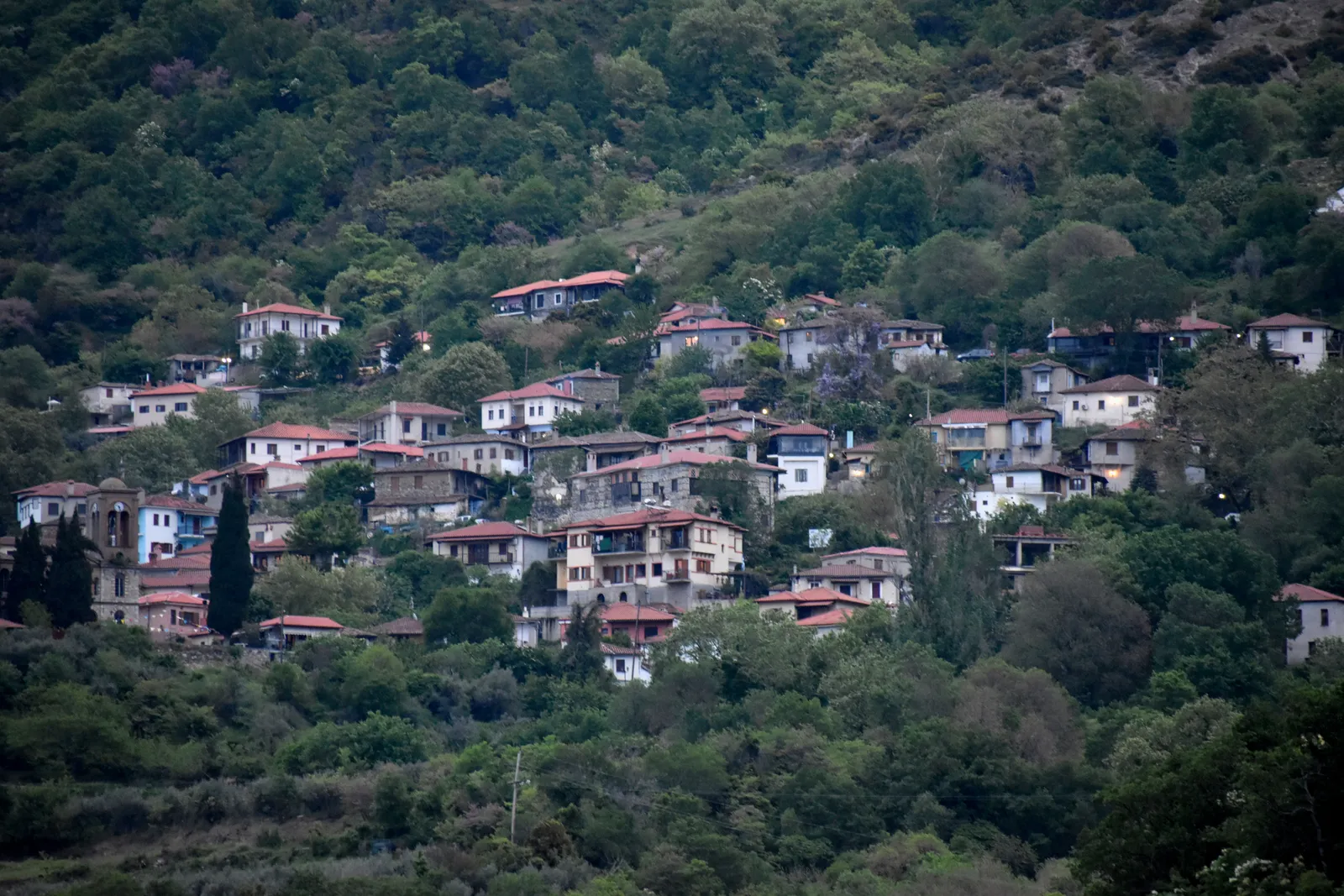
What remains from that time are the houses. The best known is the mansion of Georgios Schwartz, which is now a museum. From outside it looks like a heavy stone building. Inside it is full of carved wooden ceilings, walls painted with landscapes and cities, and large windows looking towards the valley. It is one of the finest 18th-century mansions in Thessaly and shows how rich this place once became.
A walk through the village
Ampelakia has cobbled lanes that climb and dip, a square with coffee houses and a view towards the plain. It is not a big village and you can walk it in a few hours. The interest is in the details: the old mansions, the fountains, the churches, the courtyards with vine arbours that remind you why the village has its name ("ampeli" means vine).
Getting there
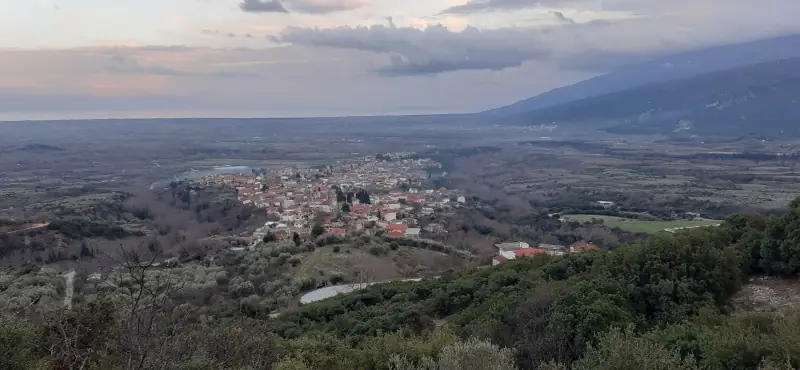
Ampelakia is about 35 kilometres from Larissa. The road climbs up from the Vale of Tempi in bends. It combines easily with a stop at Agia Paraskevi, down in the gorge. Before you go to the Schwartz mansion, check the days and hours it is open.
Autumn is a good time: at the end of October the village also hosts the chestnut festival.