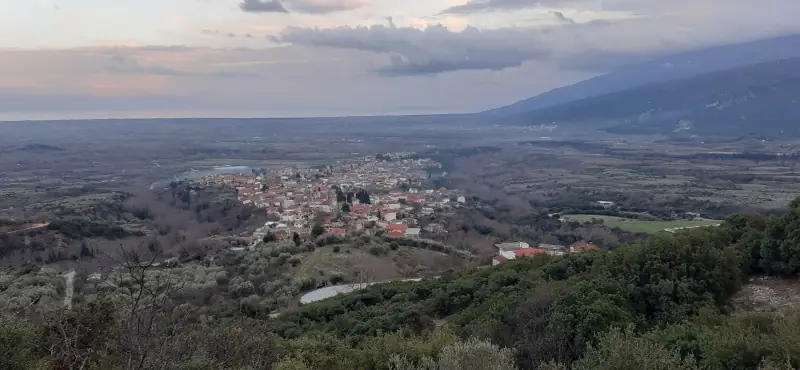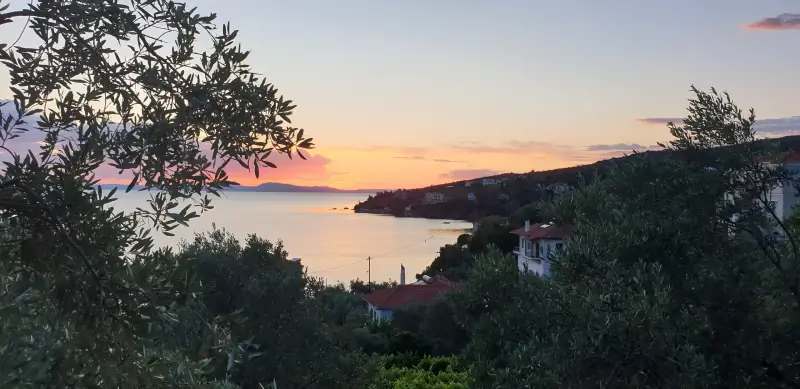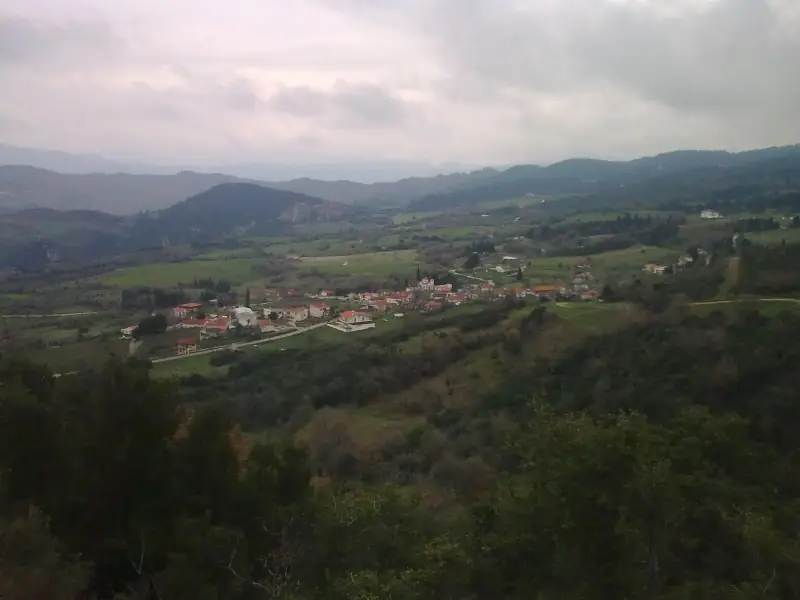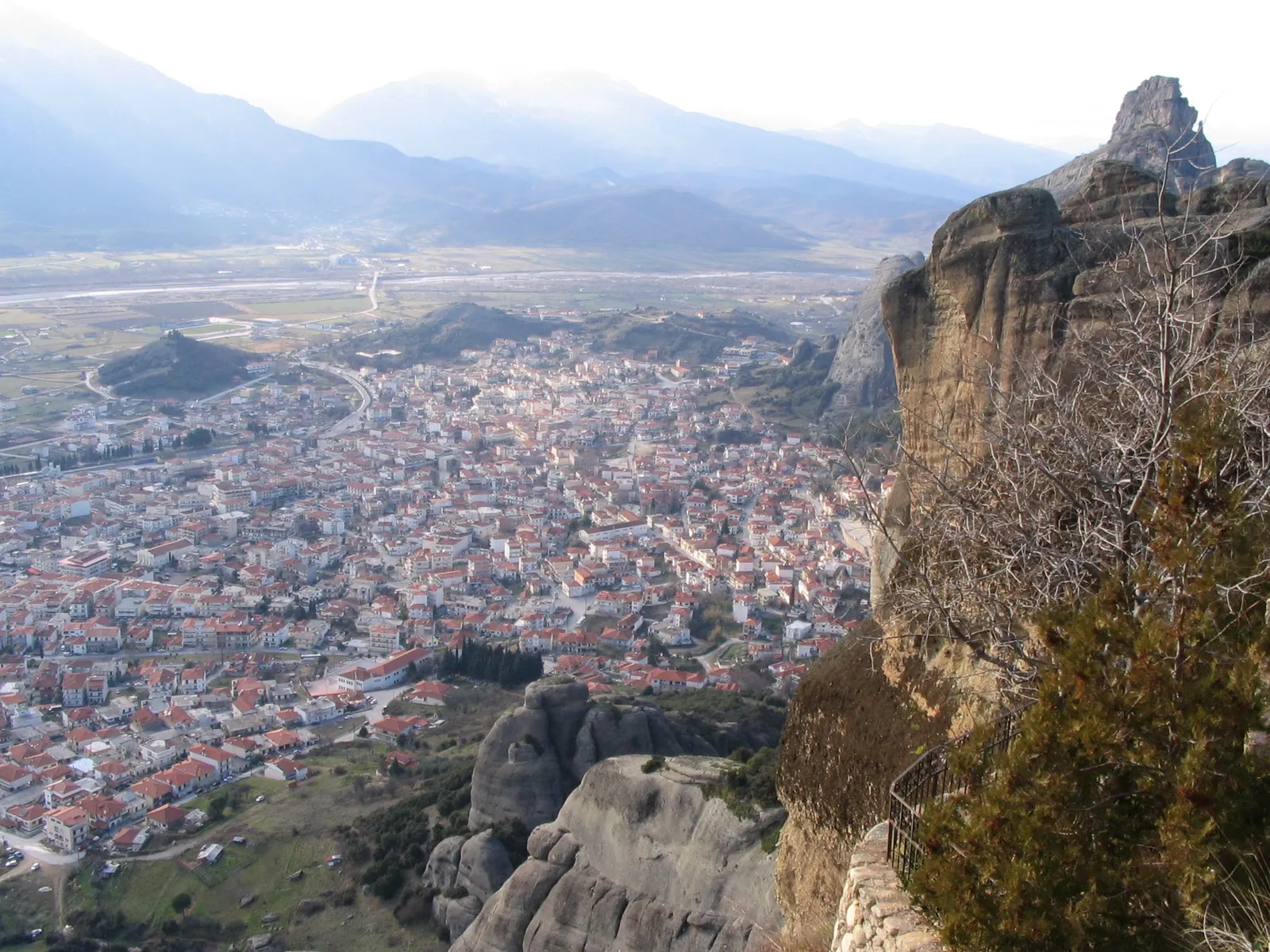
Most travellers treat Kalambaka like a corridor. They park, grab a bite, go up to Meteora and leave. That is a pity, because the town beneath the rocks has a history of its own, much older than its name.
A name made of rock
The name "Kalambaka" first appears in an Ottoman tax register of 1454–1455. The scribe wrote: "Settlement of Stagoi, the famous Kalambaka". The word comes from the Turkish kalpak, a fur cap, and kaya, rock. Perhaps because some of the rocks above the town look like a cap, perhaps because monks in caps lived up there. Another reading takes it as "fortress on the top of the rock". All three explanations share the same thing: stone.
Aiginion, Stagoi, Kalambaka
Before the Ottomans, the town was called Stagoi. In the 10th century it was a Byzantine fortress and the seat of a bishop. From that time survives the church of the Dormition of the Virgin, built in the late 11th or early 12th century on top of an older church.
Further back still, this was ancient Aiginion. The identification was first made by the English traveller William Leake, thanks to an ancient inscription built into the wall of the church of Saint John the Baptist. Later it was supported by the remains of a fortified town found beneath the modern one.
What to see in town
The Natural History Museum of Meteora and Mushroom Museum is the big surprise. In about 1,100 square metres it shows more than 350 species of birds and mammals, in dioramas of forest, wetland and alpine zone. The mushroom section has 250 species, handmade as sculptures in the right colour and size, at three stages of growth. The museum works with the University of Athens and since 2015 has also organised a Mushroom Festival.
The town also has the Digital Projection Centre for the History and Culture of Meteora, a good first stop before you head up to the rocks.
The station at the end of the line
Kalambaka is the terminus of the railway that runs through Trikala, Karditsa and Farsala. The old station buildings are listed. If you plan to come by train, check the current state of the timetable first, because the line has been hit by the disasters of recent years.
Practical notes
Kalambaka is the best base for Meteora and for Kastraki. Give it an afternoon of its own: the museum, the Dormition, a walk beneath the rocks, and dinner while the light changes on the stone.