The history of Trikala
The history of Trikala: ancient Trikke of Asclepius, the Fortress, Meteora, the Koursoum Mosque, the old quarter of Varousi and the musician Vassilis Tsitsanis.
Trikala spreads along the banks of the Lithaios, where the Thessalian plain begins to rise towards the Pindus. It is a city with ancient roots, a Byzantine castle, Ottoman monuments and a strong memory of Greek popular music.
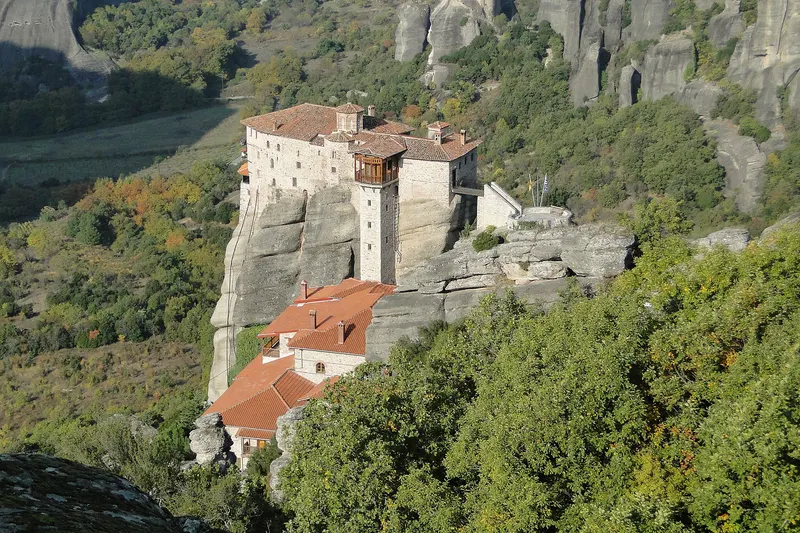
The same region is home to Meteora, one of the most striking landscapes in Greece.
Antiquity
Trikke of Asclepius
The ancient city was called Trikke. According to tradition it was the birthplace of Asclepius, the god of medicine, and its Asclepieion was considered one of the oldest in the Greek world.
Trikke already appears in the Catalogue of Ships in the Iliad: the sons of Asclepius, Podalirius and Machaon, led its men to Troy.
Byzantium
The castle and the rocks
On the hill of the ancient acropolis rose the Fortress of Trikala, repaired and enlarged many times over the centuries.
A few kilometres to the west, on the giant rocks of Meteora, one of the most important monastic communities of the Orthodox world took shape from the 14th century. Meteora was declared a UNESCO World Heritage Site in 1988.
Ottoman period
The Koursoum Mosque and Varousi
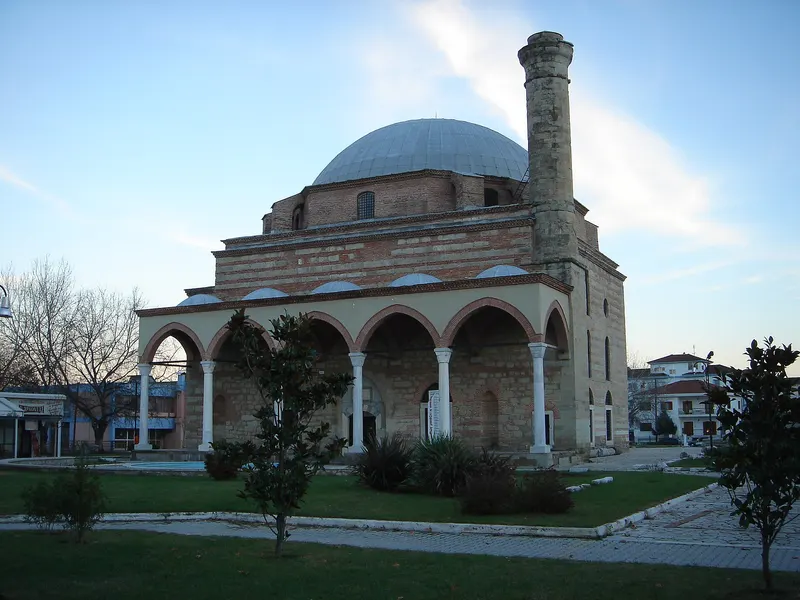
Trikala fell early to the Ottomans and became an important administrative centre. The 16th-century Koursoum Mosque, attributed to the great architect Sinan, is one of the finest Ottoman monuments in Greece.
Below the castle, the old quarter of Varousi still keeps the narrow lanes and mansions of the Christian town of that era.
1881 to today
Mills, rebetiko and a digital city
In 1881 Trikala became part of Greece. The town grew as the market of the plain and the mountain villages. The Matsopoulos Mill, an old industrial complex, is now a cultural venue.
Vassilis Tsitsanis, one of the greatest figures of rebetiko music, was born in Trikala in 1915. In the early 21st century the city was among the first in Greece to invest in digital services for its citizens.