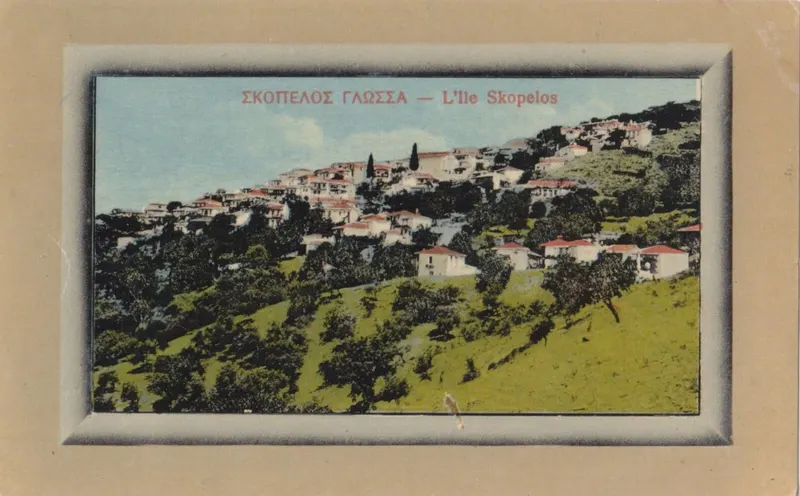
In 1454, an Ottoman clerk climbed into the villages above the plain of Karditsa to record who lived where and what they paid. In a village he wrote down as "Mosnikolas" he found 52 families. Most of them lived from vineyards and wine, and to a lesser degree from beekeeping, silk and flax. Five and a half centuries later, Mesenikolas is still doing the same thing.
Where it is
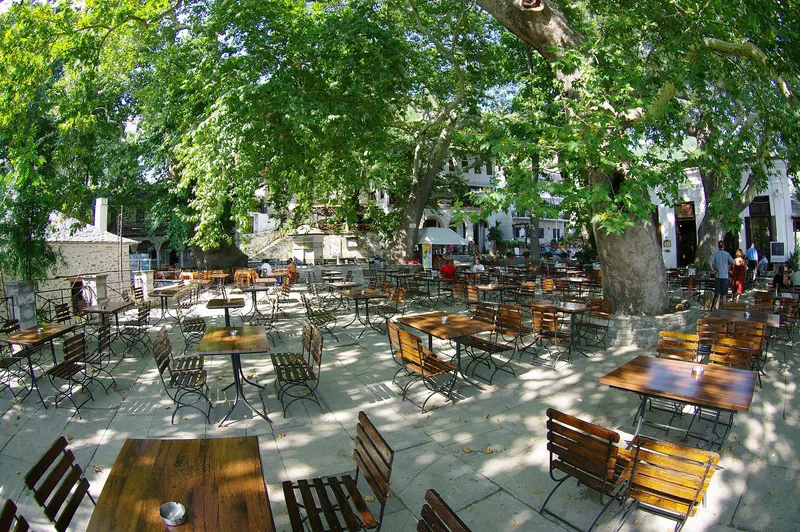
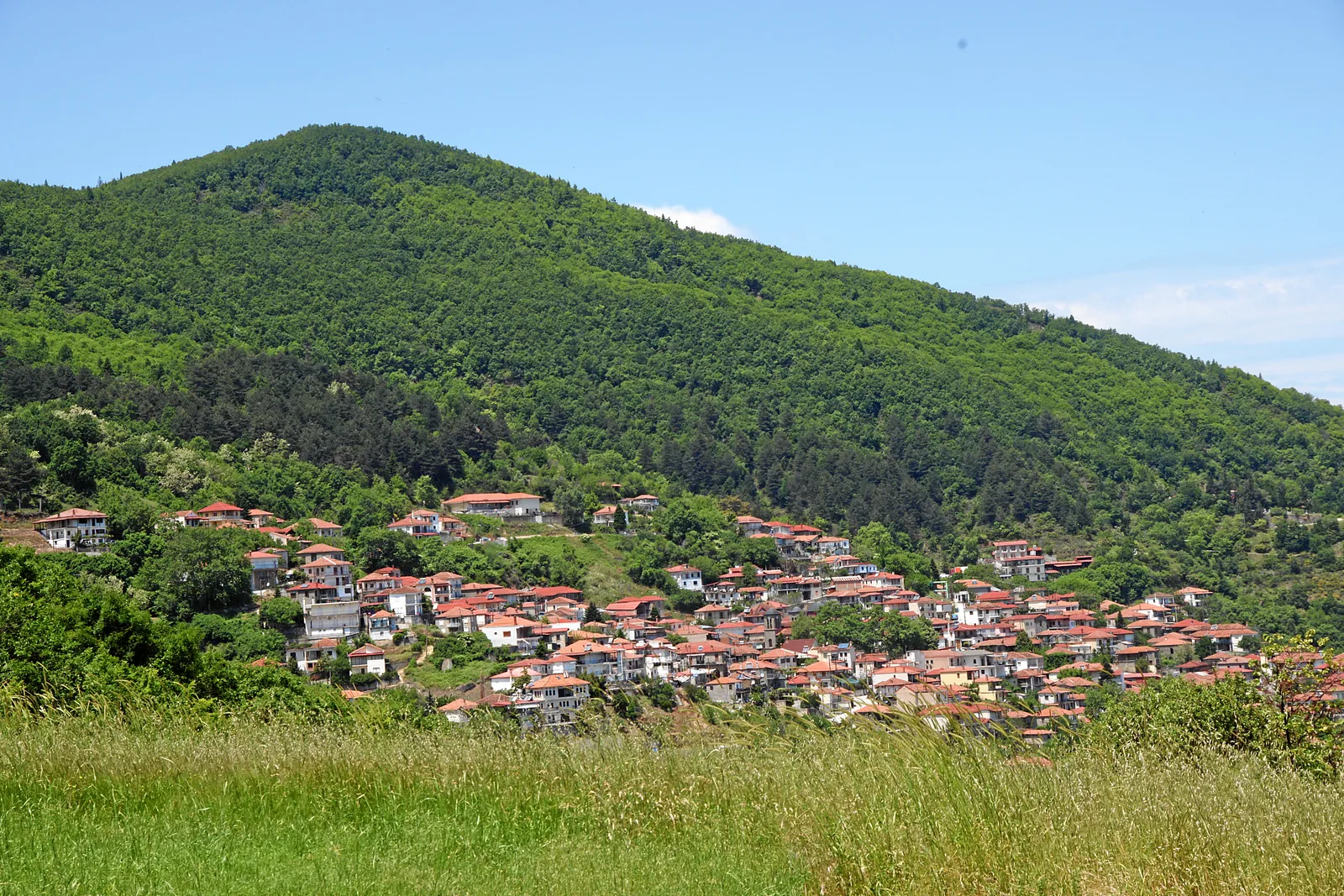
The village sits at about 690 metres, some 22 kilometres west of Karditsa, on the road that climbs towards Lake Plastiras. It belongs to the Municipality of Lake Plastiras and had 527 inhabitants at the 2021 census. From the square the view opens across the whole Thessalian plain.
A name with a story
There are two explanations for the name, and both are good ones. The first says it comes from "Messire Nikolas", Mister Nikolas, a powerful man in the area at the time of the Franks. The second, put forward by the historian William Miller, links it to Nicholas of Saint Omer, a Frankish baron who marched south in the early 14th century to take the castle of Fanari. The campaign never turned into a battle, and some of his men may have stayed in the mountains.
Even earlier, a small ancient town called Polichna stood here, one of the forts around ancient Metropolis, guarding the pass from the mountains to the plain.
The village lived through everything the Agrafa mountains lived through: self-government under Ottoman rule, destruction in 1823, and the uprising of 1878, when the rebels met here to set up a local administration. In 1881 Mesenikolas became part of Greece.
The wine
Today you will find the village's name on wine labels. PDO Mesenikola is a red wine from the area, based on a local grape variety, Mavro Mesenikola, which is grown almost nowhere else. The 15th-century register already listed vineyards here. The slopes, the altitude and the plain below are doing what they always did.
Autumn, the season of the harvest and the new must, is the best time to understand why this village never changed trade.
Nearby
Within the community's boundaries stands the Monastery of Panagia Koroni, on a hill above the plain. In the village itself, stop at the church of Agios Dimitrios with its stone doorway, and at the old church of the Virgin, which has a founder's inscription dated 1637.
Lake Plastiras is very close. A good day out is the villages in the morning, the lake at lunchtime and the drive back to Karditsa with a bottle of PDO Mesenikola in the boot. For the villages around it, open the Mesenikolas page on our map.