The history of Karditsa
The history of Karditsa and its region: ancient cities of the plain, the Agrafa mountains, the Occupation and the Resistance, Lake Plastiras and the city of bicycles.
Karditsa lies at the south-western edge of the Thessalian plain, where the flatlands meet the Agrafa mountains. It is a region with two souls: the plain of wheat and cotton on one side, remote mountain villages on the other.
Antiquity
Cities of the plain
Important ancient cities flourished here. Kierion, which many scholars identify with Homeric Arne, and Metropolis, where excavations uncovered an Archaic temple of Apollo, show how densely settled the plain already was in antiquity.
Ottoman period
The market of the plain and the Agrafa
The modern town of Karditsa grew mainly in Ottoman times, as a market for the villages of the plain.
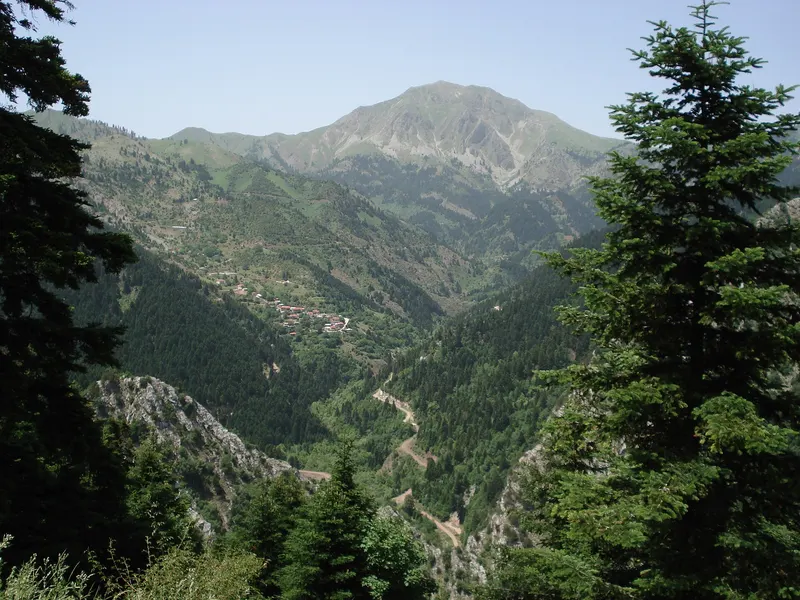
The Agrafa mountains had a history of their own: rugged and isolated, they kept much of their autonomy. According to one explanation, their name, which means 'unwritten', comes from the fact that their villages were not entered in the conquerors' tax registers.
1881 to 1944
Union with Greece, the land and the Resistance
In 1881 Karditsa became part of the Greek state. As across Thessaly, the question of land and the great estates marked the decades that followed.
During the Occupation the region was a centre of the Greek Resistance. The town was liberated by resistance forces in March 1944, often described as the first liberation of a town in occupied Greece.
Recent times
The lake, the bicycles and the water
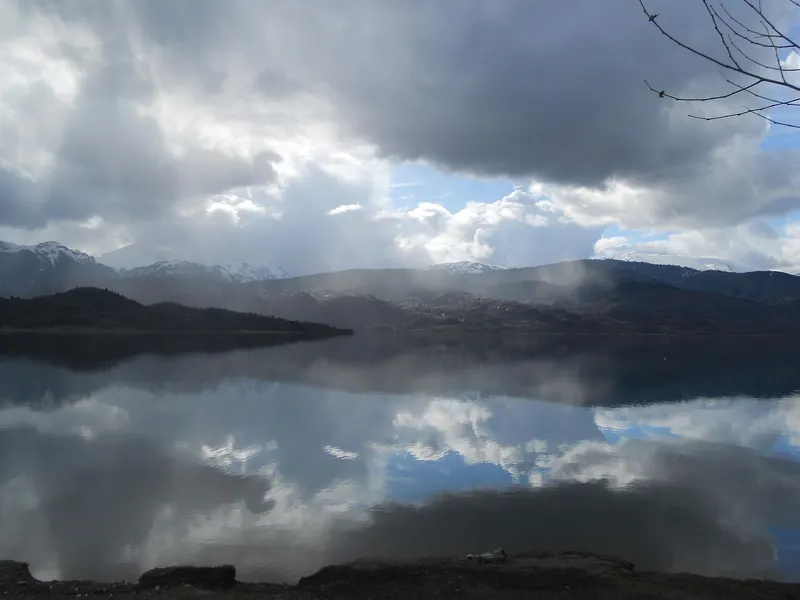
In the mid-20th century the Tavropos dam created the man-made lake that bears the name of Nikolaos Plastiras, the general and politician who first envisioned the project. Today it is one of the best-loved landscapes of Thessaly.
Karditsa is known as a city of bicycles. In 2023 Storm Daniel hit its plain hard, and reconstruction continues.