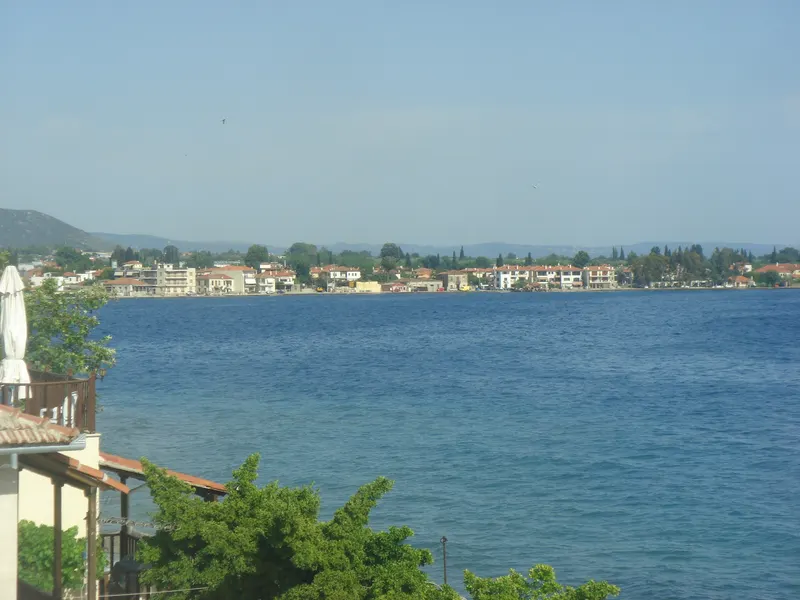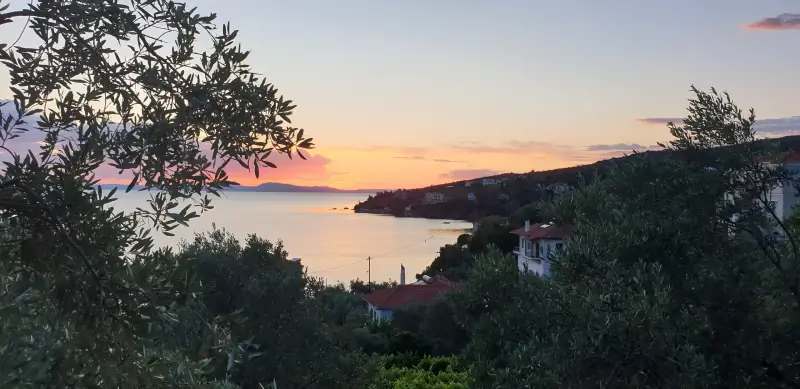
From the Volos seafront to the square of Portaria is about twenty minutes by car. In that time a lot changes: the sea becomes forest, asphalt becomes cobbled path, and the temperature drops by a few degrees. For many people in Volos, Portaria is the city's "opposite", the place you drive up to for coffee on an afternoon.
The square
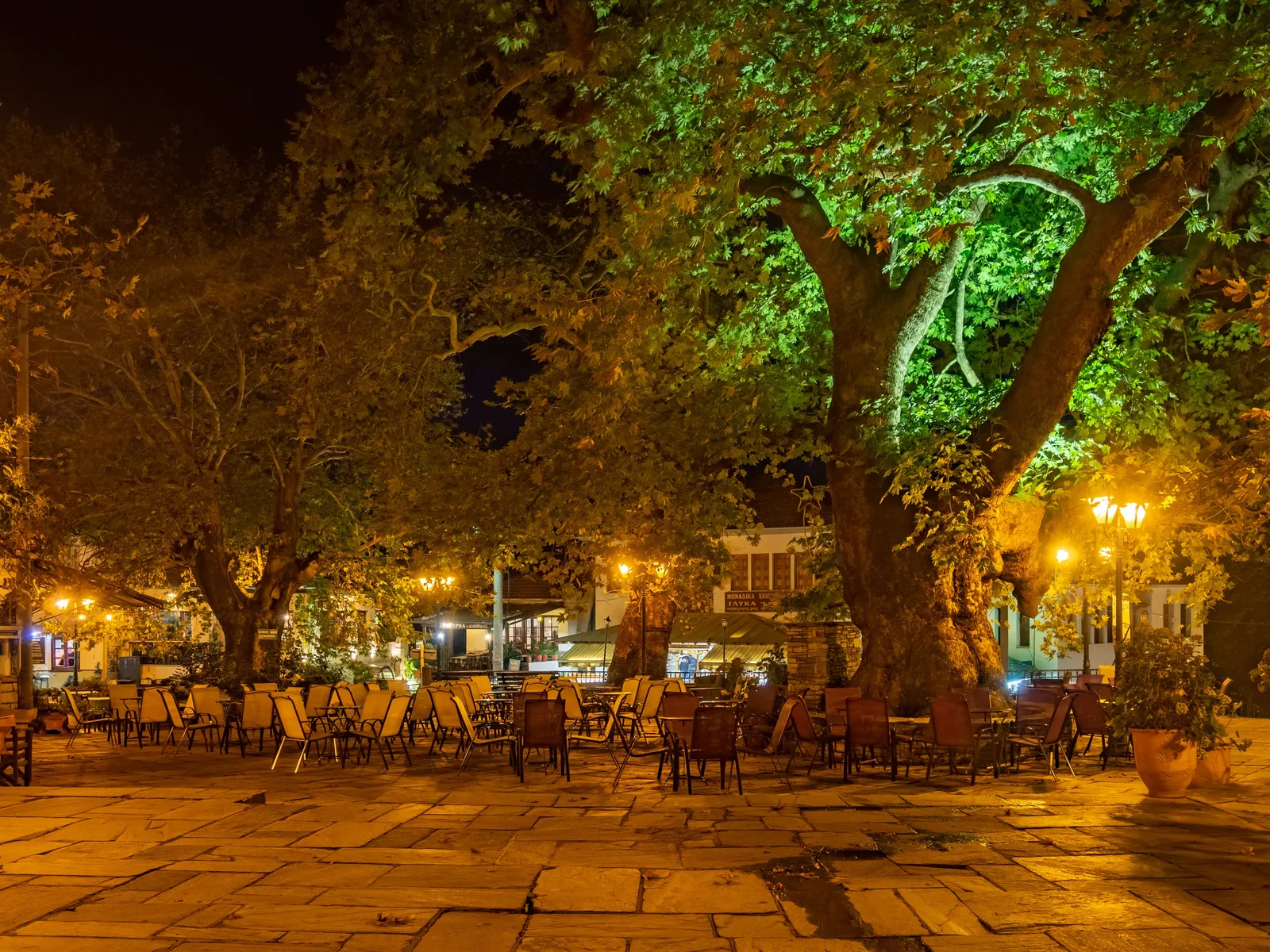
The heart of the village is the square with its big plane trees and coffee houses around it. From here cobbled paths disappear between stone mansions with the typical Pelion roofs of slate. A little further on, the road forks: one branch climbs towards Hania and the eastern side of the mountain, the other leads to Makrinitsa.
The old village
Portaria is one of the oldest villages on Pelion. A Byzantine church survives here, the Panagia Portarea, dating from medieval times. Under Ottoman rule the village, like others on Pelion, had a degree of self-government, developed trade and crafts, and its merchants built the mansions you see today.
What to do
- Walk the cobbled path towards Makrinitsa or downhill towards Volos. The old paths of Pelion linked the villages long before the roads.
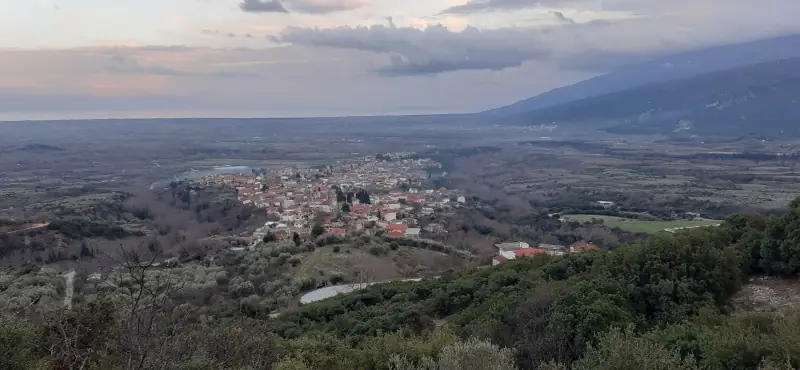
- Stand at the edge of the village to look down on Volos and the Pagasetic Gulf. At dusk the lights of the city come on one by one.
- Eat spetsofai or a pie in the shops on the square, and take home some spoon sweet.
Autumn is one of the best seasons. The trees change colour and there are fewer people than in summer or at Christmas.
Staying and day trips
Portaria has many guesthouses in old mansions and makes a good base for western Pelion. In a few minutes you are in Makrinitsa, in Hania and, in winter, at the Agriolefkes ski centre. If you only have an afternoon, drive up from Volos, walk to the edge of the village and come down after dark. The view of the city lit up is worth the drive.