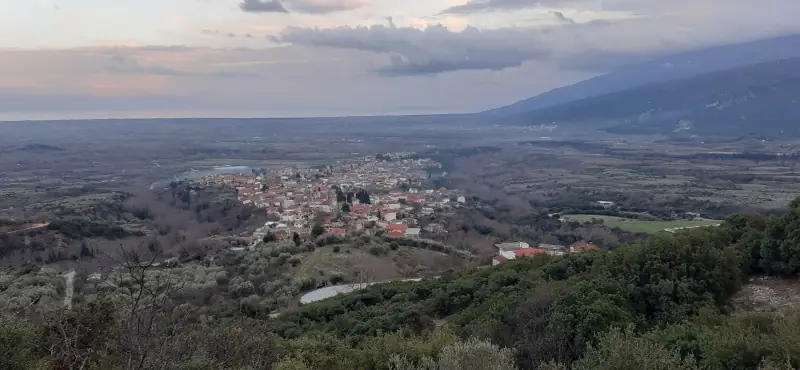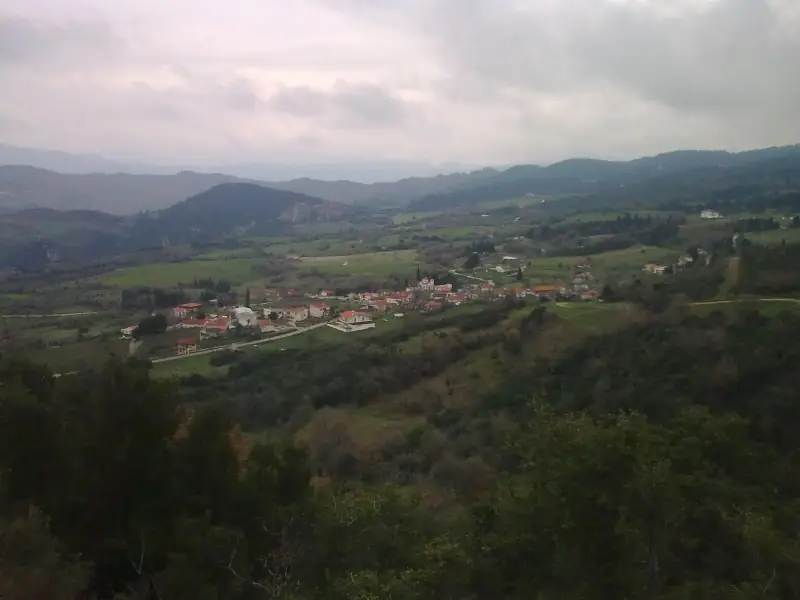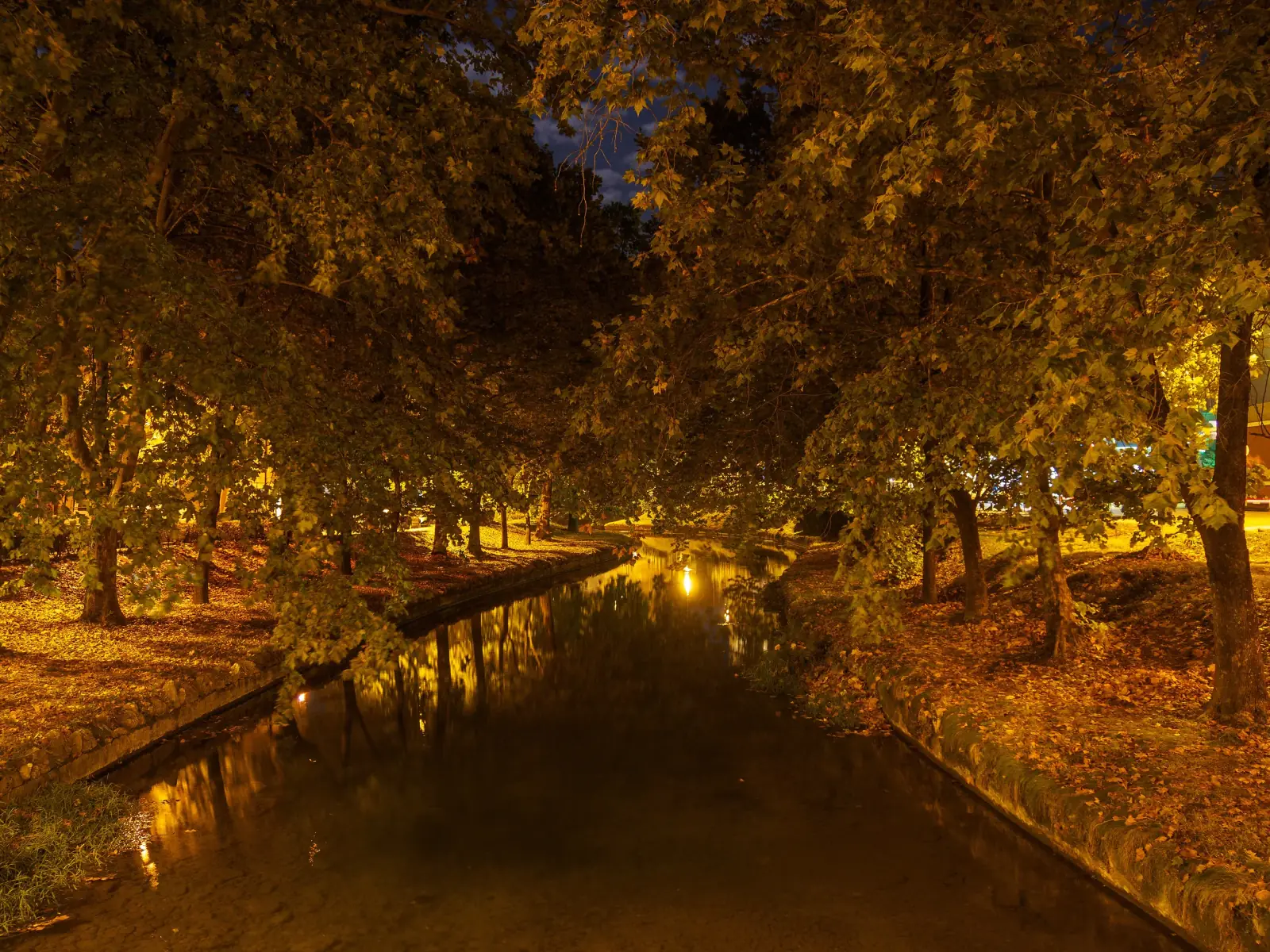
In Trikala the first thing you notice is the water. The Lithaios cuts the city in two, with bridges every few metres, ducks, willows and pedestrian streets along the banks. People walk beside it, cycle, drink coffee looking at the current. A river, a tributary of the Pineios, has become the main square of a whole city.
The Trikki of Asclepius
The modern city stands on ancient Trikki, which tradition says took its name from the nymph Trikki, daughter of the Pineios. This is where the ancients placed the life and work of Asclepius, the god of medicine, and one of the oldest Asclepieia stood here. Its ruins can still be seen in the city.
In the Catalogue of Ships in the Iliad, Trikki sends thirty ships to Troy, led by the sons of Asclepius, the physicians Machaon and Podalirius. Later it became the centre of Hestiaeotis, the region that roughly covered today's prefecture.
Byzantium, Ottomans, a school
The name "Trikala" first appears in the Alexiad of Anna Komnene. In 1395 the city passed to the Ottomans and became the capital of a sanjak, famous for woollen textiles and leather. From that period remain the Koursoum Mosque and the quarter of Varousi, with its lanes and old houses below the Fortress.
For centuries Trikala was also home to the School of Trikki, where Dionysios the Philosopher taught. As metropolitan of Larissa and Trikala, he led one of the first uprisings against the Ottomans in 1601.
The city today
With 62,064 inhabitants (2021 census) Trikala is the largest city in western Thessaly. It is known for its bicycles and smart-city apps, and for music: Vasilis Tsitsanis was born here. The old Matsopoulos flour mill has become a park and cultural venue that hosts events such as a balloon festival and a comedy festival.
How to get to know it
Start at the central bridge over the Lithaios and climb from Varousi to the Fortress for the view. Come down to the Manavika quarter to eat. The next morning, Meteora is less than half an hour's drive away, and the mountains of Pyli and Pertouli a little further.