"Synnefiasmeni Kyriaki", Cloudy Sunday. Two words, and almost every Greek can hum the rest. The man who wrote it was born in Trikala on 18 January 1915, and died in London on his birthday, in 1984.
From Trikala to Athens
Vasilis Tsitsanis learned the bouzouki as a boy in Trikala. In the mid-1930s he moved to Athens, supposedly to study law, and very soon found himself in the recording studios. From then on his story becomes the story of Greek song.
Over the years he wrote hundreds of songs. He changed rebetiko: he took it from the narrow image of hashish dens and the underworld and brought it to a wide audience, with more lyrical words and richer melody. Many believe that without him there would be no laiko song as we know it.
A song for the Occupation
"Cloudy Sunday" was written, by his own account, during the years of the Occupation, in Thessaloniki, where he lived at the time. It was released on record after the Liberation and became one of the best-loved Greek songs. It is a good example of how Tsitsanis wrote: about personal pain, in words that held a whole era.
Trikala and Tsitsanis
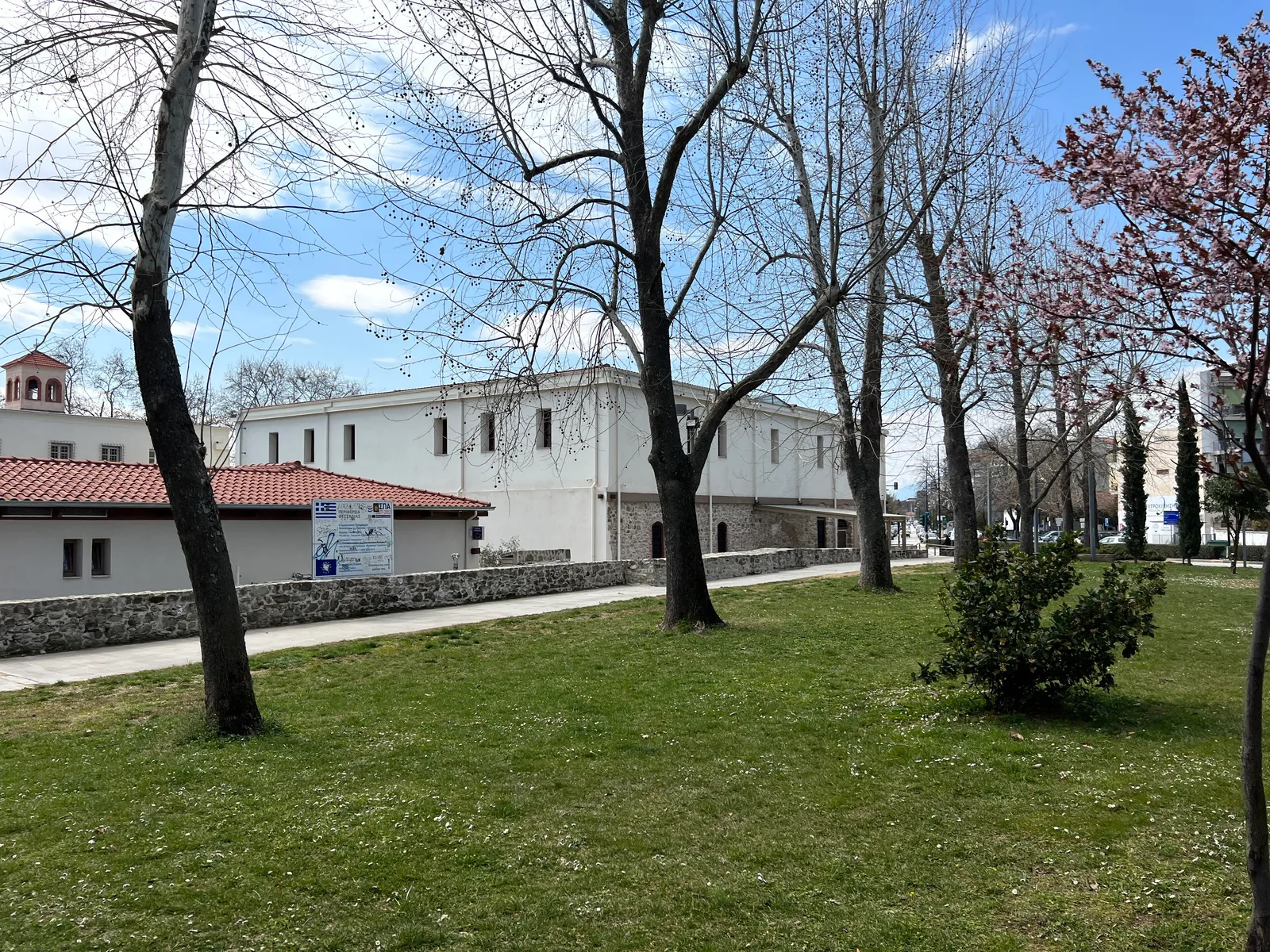
The city has not forgotten him. Trikala has a museum dedicated to him, with photographs, personal belongings and, of course, bouzoukis. Every year it also holds the Tsitsaneia, with concerts in different places around the prefecture. This year the events brought rebetiko voices to Varousi, the Matsopoulos Mill and Farkadona.
There is something special about hearing Tsitsanis in Trikala. His songs carry the melancholy of the provinces, love, poverty and the hope of a whole generation.
If you go to Trikala
- Visit the museum, and check its opening hours first.
- Walk through Varousi, the old quarter below the Fortress.
- Find a place with live laiko music in the evening. A Tsitsanis song is bound to come up.
And if you can't make the visit, put on one of his songs as you cross the bridge over the Lithaios. It fits.