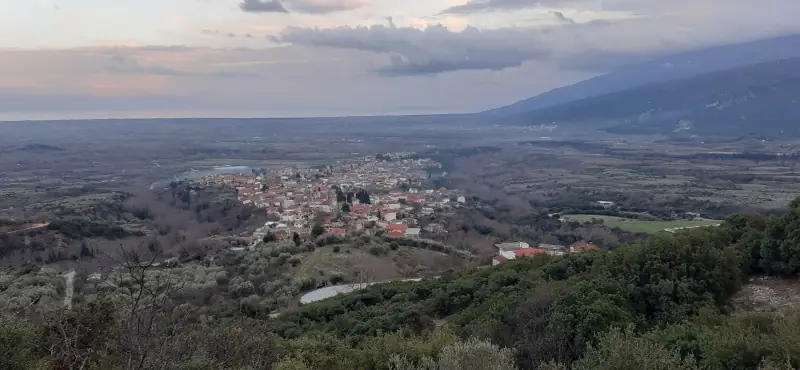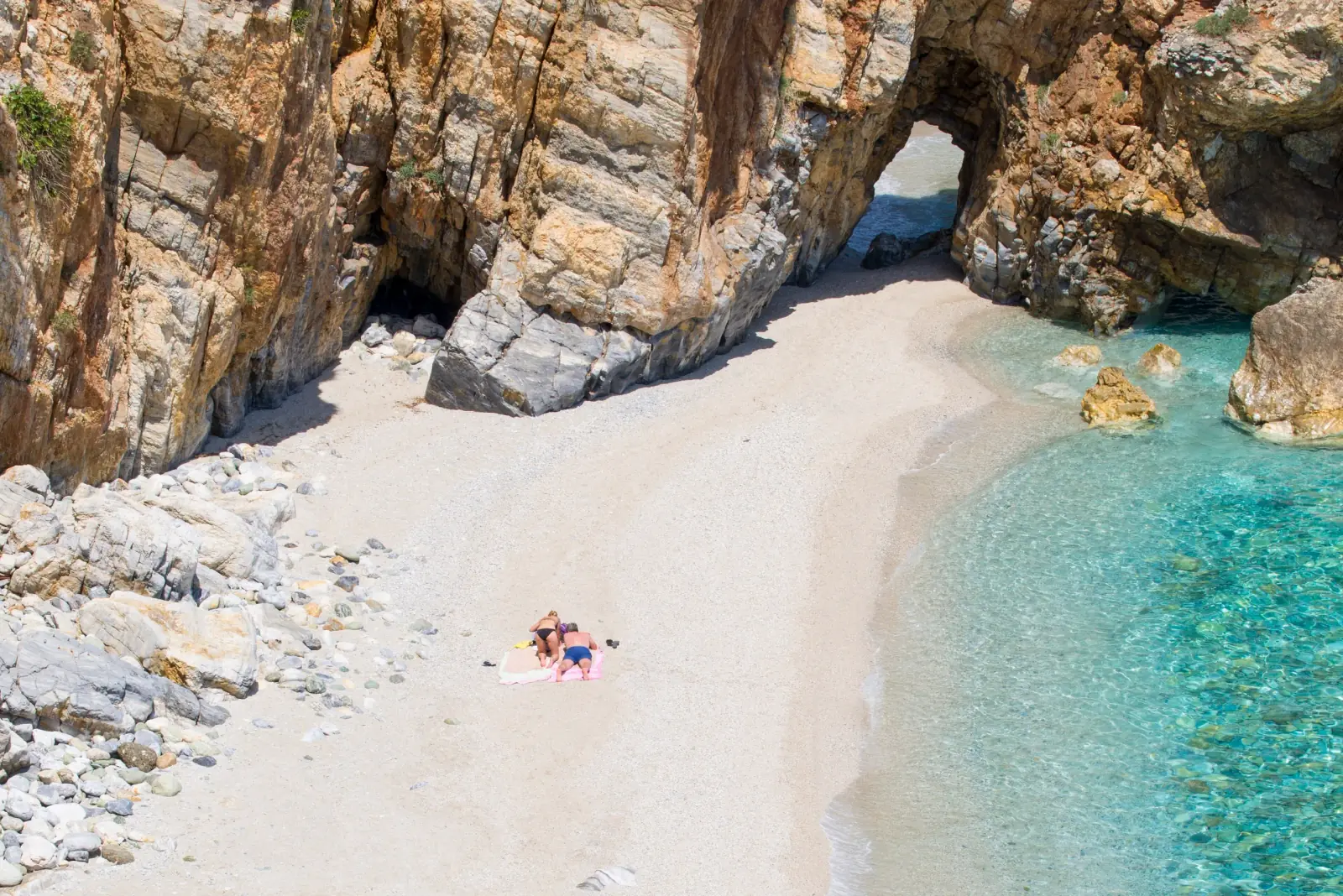
You go down the steps and at the bottom a rock is waiting, with a hole in the middle. On one side the first cove, on the other the second, and between them the sea washing through the opening. Mylopotamos is one of those beaches that need no description once you have seen it.
Where it is
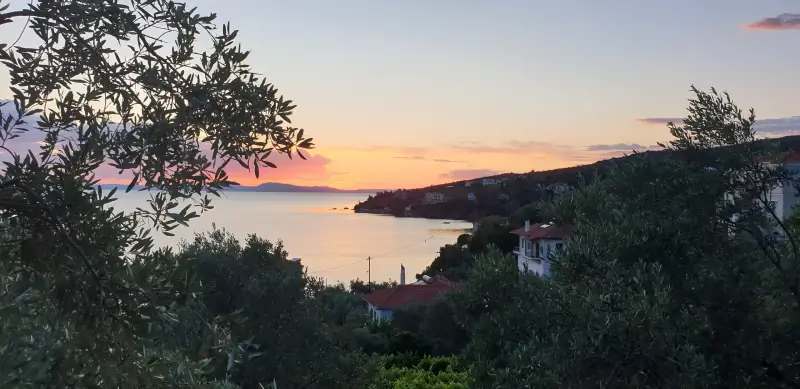
It lies on the eastern, Aegean side of Pelion, about **6 kilometres south-east of Tsagkarada and 55 from Volos. The road drops from the village through chestnut and plane trees, with bends that open suddenly onto the sea. As a settlement, Mylopotamos was first recorded in **1981 and it is tiny: the 2011 census counted 18 inhabitants. It belongs to the community of Tsagkarada.
The name, mill and river, recalls the streams that run down from the mountain to the sea. They are the same waters that make the eastern side of Pelion so green.
The arch
The beach is divided into two smaller coves by a natural stone wall with an opening like an arch. When the sea is calm you pass from one to the other through the opening. The first beach is the one you see on the way down, the second is more secluded.
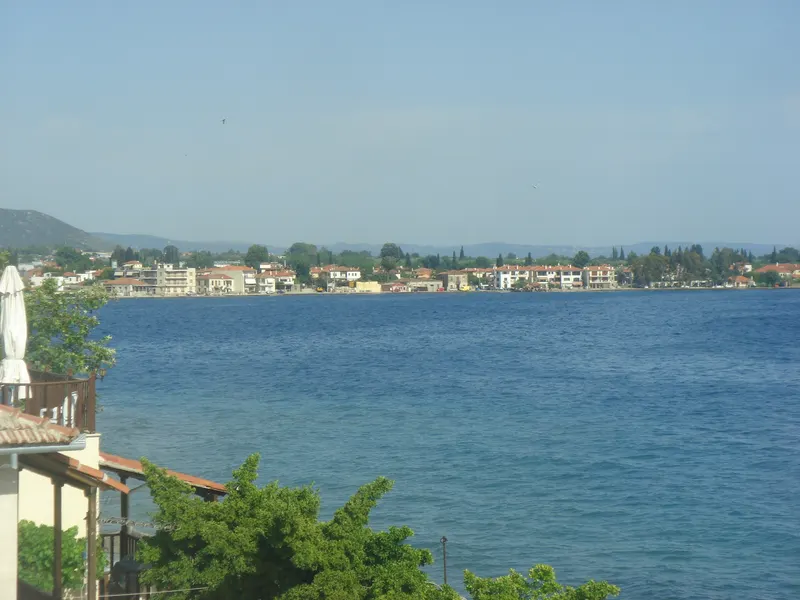
The sand is mixed with pebbles, and the water gets deep quickly. The Aegean here is open and cooler than the Pagasetic Gulf, even in August.
The steps
To reach the sea you go down quite a few steps from where the road ends. They are not hard, but allow for them on the way back, especially with children or older people.
In autumn
With autumn, Mylopotamos empties. The last swimmers are usually locals from Tsagkarada, who come down at midday when the sun still has strength. If a north or east wind is blowing, the waves break on the arch and swimming is not worth the risk, but the view is worth the drive.
Combine it with Mouresi and Zagora to the north, or with Damouchari a little further on. And before you leave Tsagkarada, stop by the great plane tree of Agia Paraskevi.